* Denotes a title I resolved to read this year
July Reading Log

All in a Day's Work
A boy, about twelve, came in with a list of Newbery's. I helped him locate several, recommending some over others.
"Oh, these aren't for me," he said. "I'm getting them for my grandma."
"Okay," I replied. "But still, this one's better than that one."
"Eh," he shrugged, taking the book from my hands. "She's just an old lady. She won't care."
"Oh, these aren't for me," he said. "I'm getting them for my grandma."
"Okay," I replied. "But still, this one's better than that one."
"Eh," he shrugged, taking the book from my hands. "She's just an old lady. She won't care."
An Evening With Shakespeare
 Last night we went and saw The Taming of the Shrew at the amazing Ewing Manor's outdoor theater. (They don't let you photograph the stage)
  We picnicked on the lawn beforehand.


Me being dreamy and contemplative. (ha)

Scoop of the e-e-evening: The Dragonfly Pool
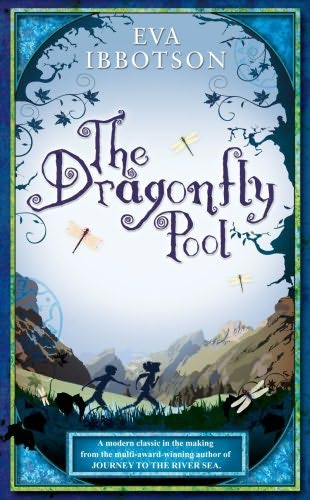 From the publisher: At first Tally doesn’t want to go to the boarding school called Delderton. But she soon discovers that it is a wonderful place where freedom and self-expression are valued. Tally organizes a ragtag dance troupe so the school can participate in an international folk dancing festival in Bergania in the summer of 1939. There she befriends Karil, the crown prince, who would love nothing more than to have ordinary friends and attend a school like Delderton. When Karil’s father is assassinated, it is up to Tally and her friends to help Karil escape the Nazis and the bleak future he has inherited.
Charles Dickens published David Copperfield in 1850, at the zenith of his writing career. I imagine readers, gasping in the wake of that brilliant book, were just a little disappointed with subsequent works (ever heard of The Uncommercial Traveller?). No doubt it's an entertaining story, but it's written after David Copperfield. 19th century readers were pumped about Another Dickens!! Only to read The Mystery of Edwin Drood. Dickens, but just okay Dickens.
Fast forward 150 years. In 2004, Eva Ibbotson published The Star of Kazan, pretty much the best children's novel of the 21st century (in my opinion). Her previous--and popular--novels never hinted at the genius waiting in the wings. The Star of Kazan was amazing. But it was also, it seems, Ibbotson's zenith production. (Well, the woman's in her eighties, for goodness sake!)
I enjoyed listening to The Dragonfly Pool. It reminded me of her other non-fantasy, Journey to the River Sea ... light and tasty. But missing from Ibbotson's latest--and perhaps last--contribution to the literary world is the depth, the gorgeous inter-connection, the brilliant casting that leaves readers of The Star of Kazan feeling satisfied to the very tips of their toes.
UPDATE: STOP THE PRESSES!
Lulu Spur
 Since finishing the first draft of my novel in February, I've ignored the warty mess. Hours and hours of editing crouched at my door, but I chose to think about other things.
However, I was finally bitten again, and began pottering. I'm up to chapter seven (of fifteen). But it's only pottering.
Then today, I remembered my spur.
I'm not against publishing. I mean, I would love to get my novel published. Who wouldn't? But honestly, I'm writing the book for myself and my siblings. The publishing world is a gritty place, and pooh-pooh as it may sound, I'm content to sit by the hearth and read my lines from a lone, jacket-less hardcover.
Enter Lulu.
I would never attempt self-publishing. Yikes. However, just as I adore kits like Creations By You, I adore the idea of having a twenty-dollar, hard copy of The Jonah Bottle for my very own. So the spur in my side, the treat goading me toward the finish line, is a Lulu hardcover for my personal bookshelf.
Get to work, Noel!
Heroes: Elizabeth Enright
How do I love thee? Let me count the ways.
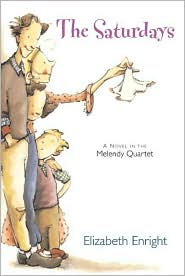 Elizabeth Enright's Melendy Quartet follows siblings Mona, Rush, Miranda (Randy, for short) and Oliver. First published in 1941, The Saturdays kicks off the series and centers on the foursome's Independent Saturday Afternoon Adventure Club (I.S.A.A.C.), an allowance-endowed venture formed so one lucky Melendy can enjoy a solo sojourn each week.
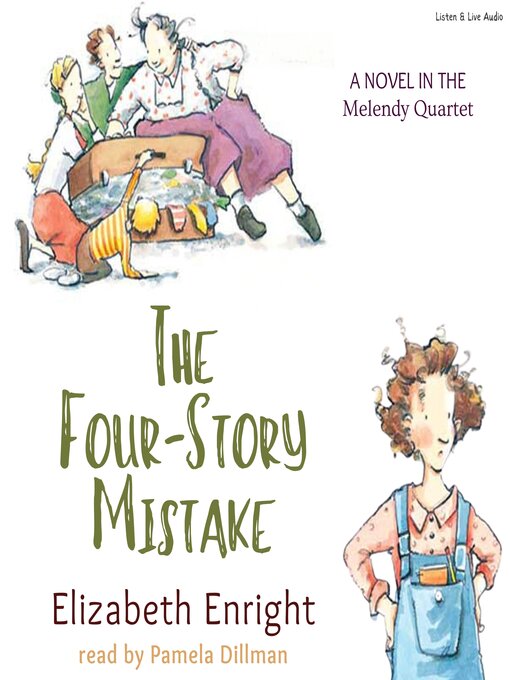
In The Four-Story Mistake (1942) the family moves from their city brownstone to the country.
 Then There Were Five (1944) describes what happens when the siblings befriend an orphan.
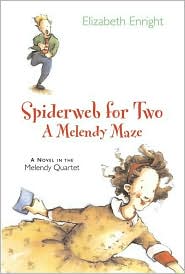 In Spiderweb for Two: A Melendy Maze (1951), when everyone else leaves for school, Randy and Oliver are left to solve a mystery.
 Summer has a magic all its own in Elizabeth Enright's beloved story about two children and their discovery of a ghostly lakeside resort.
(text from PW)
Elizabeth Enright's Melendy Quartet follows siblings Mona, Rush, Miranda (Randy, for short) and Oliver. First published in 1941, The Saturdays kicks off the series and centers on the foursome's Independent Saturday Afternoon Adventure Club (I.S.A.A.C.), an allowance-endowed venture formed so one lucky Melendy can enjoy a solo sojourn each week.In The Four-Story Mistake (1942) the family moves from their city brownstone to the country.
In Spiderweb for Two: A Melendy Maze (1951), when everyone else leaves for school, Randy and Oliver are left to solve a mystery.Summer has a magic all its own in Elizabeth Enright's beloved story about two children and their discovery of a ghostly lakeside resort.(text from PW)
All in a Day's Work
I popped upstairs with some overdue books just as the adult librarian told a patron that her computer time was up.
"No."
Clari raised an eyebrow and walked toward the girl.
"Don't touch me!"
Clari stopped. "I'm not going to touch you, but if you don't sign out now, I'm going to have to revoke your privileges."
"I'm not getting up."
Her mom came in at this point, threatening to call the girl's father.
"No," the girl repeated. "I'm not getting up."
"The librarian'll call the police," her mother warned. "I'll call the police myself if you don't get out of the hmmm chair."
"She's staring at me," interrupted the girl. "The librarian's staring at me."
By this time, Clari had walked back to her desk, ignoring the impossible scene. But this girl obviously wasn't all there. After ten minutes of hissed--and then shouted--argument, the mother finally dragged her wayward teenager out the door.
Ah, librarianship.
"No."
Clari raised an eyebrow and walked toward the girl.
"Don't touch me!"
Clari stopped. "I'm not going to touch you, but if you don't sign out now, I'm going to have to revoke your privileges."
"I'm not getting up."
Her mom came in at this point, threatening to call the girl's father.
"No," the girl repeated. "I'm not getting up."
"The librarian'll call the police," her mother warned. "I'll call the police myself if you don't get out of the hmmm chair."
"She's staring at me," interrupted the girl. "The librarian's staring at me."
By this time, Clari had walked back to her desk, ignoring the impossible scene. But this girl obviously wasn't all there. After ten minutes of hissed--and then shouted--argument, the mother finally dragged her wayward teenager out the door.
Ah, librarianship.
Noel De Vries, Alpo Blogger
 There's a new Jammy Blog (well, site, really) on my sidebar: Kidz Book Buzz, brainchild of Sally Apokedak, a fellow writer who decided the blogosphere needed someone to schedule and orchestrate blog tours for children's/YA authors and publishers. "Sally," she asked herself (hypethetically), "Why not give it a whirl?"
And boy, has she got people buzzing. Among several:
Kelly at Big A little was worried about bloggers losing their credibility by reviewing a book just to receive a free copy. She even wondered if Independent Bloggers needed a special button on their site to differentiate from Buzz Bloggers.
Chasing Ray voiced similar concerns. One commenter on her blog went as far as to say, "I would love to see a list of those "guaranteed" blogs. Most of us would immediately delete them from our bloglist."
And then there was Becky, a fellow (tentative) Buzzer. Thank you, Becky, for your honesty.
When I first saw those posts, my reaction was swift and aghast: what have I gotten myself into? I mentioned the controversy to Sally, who graciously offered to remove my name from the list of participants.

But then I started thinking. All of these dissenting bloggers are nice people. They're wonderful at what they do. However: should their arguments, valid and otherwise, chase me away from a project I was looking forward to?
Thus the name. Noel De Vries, Alpo Blogger. Who knows, maybe at some point I'll get virtual Alpo dropped down the back of my leotard. But I'm still one of the Book Buzzers. Come check us out!
Top 100 Books
Saw this list at Sarah Miller's and had to try my hand.
The instructions:
Look at the list and:
Bold those you have read.
Italicize those you intend to read.
Underline the books you LOVE.
1. Pride and Prejudice - Jane Austen
2. The Lord of the Rings - JRR Tolkien
3. Jane Eyre - Charlotte Bronte
4. Harry Potter series - JK Rowling
5. To Kill a Mockingbird - Harper Lee
6. The Bible
7. Wuthering Heights - Emily Bronte
8. 1984 - George Orwell
9. His Dark Materials - Philip Pullman
10. Great Expectations - Charles Dickens
11. Little Women - Louisa M Alcott
12. Tess of the D'Urbervilles - Thomas Hardy
13. Catch 22 - Joseph Heller
14. Complete Works of Shakespeare (I'm over halfway)
15. Rebecca - Daphne Du Maurier
16. The Hobbit - JRR Tolkien
17. Birdsong - Sebastian Faulks
18. Catcher in the Rye - JD Salinger
19. The Time Traveller's Wife - Audrey Niffenegger
20. Middlemarch - George Eliot
21. Gone With The Wind - Margaret Mitchell
22. The Great Gatsby - F Scott Fitzgerald
23. Bleak House - Charles Dickens
24. War and Peace - Leo Tolstoy
25. The Hitch Hiker's Guide to the Galaxy - Douglas Adams
26. Brideshead Revisited - Evelyn Waugh
27. Crime and Punishment - Fyodor Dostoyevsky
28. Grapes of Wrath - John Steinbeck
29. Alice in Wonderland - Lewis Carroll
30. The Wind in the Willows - Kenneth Grahame
31. Anna Karenina - Leo Tolstoy
32. David Copperfield - Charles Dickens
33. Chronicles of Narnia - CS Lewis
34. Emma - Jane Austen
35. Persuasion - Jane Austen
36. The Lion, The Witch and The Wardrobe - CS Lewis
37. The Kite Runner - Khaled Hosseini
38. Captain Corelli's Mandolin - Louis De Bernieres
39. Memoirs of a Geisha - Arthur Golden
40. Winnie the Pooh - AA Milne
41. Animal Farm - George Orwell
42. The Da Vinci Code - Dan Brown
43. One Hundred Years of Solitude - Gabriel Garcia Marquez
44. A Prayer for Owen Meaney - John Irving
45. The Woman in White - Wilkie Collins
46. Anne of Green Gables - LM Montgomery
47. Far From The Madding Crowd - Thomas Hardy
48. The Handmaid's Tale - Margaret Atwood
49. Lord of the Flies - William Golding
50. Atonement - Ian McEwan
51. Life of Pi - Yann Martel
52. Dune - Frank Herbert
53. Cold Comfort Farm - Stella Gibbons
54. Sense and Sensibility - Jane Austen (mostly ... zzz)
55. A Suitable Boy - Vikram Seth
56. The Shadow of the Wind - Carlos Ruiz Zafon
57. A Tale Of Two Cities - Charles Dickens
58. Brave New World - Aldous Huxley
59. The Curious Incident of the Dog in the Night-time - Mark Haddon
60. Love In The Time Of Cholera - Gabriel Garcia Marquez
61. Of Mice and Men - John Steinbeck
62. Lolita - Vladimir Nabokov
63. The Secret History - Donna Tartt
64. The Lovely Bones - Alice Sebold
65. Count of Monte Cristo - Alexandre Dumas
66. On The Road - Jack Kerouac
67. Jude the Obscure - Thomas Hardy
68. Bridget Jones' Diary - Helen Fielding
69. Midnight's Children - Salman Rushdie
70. Moby Dick - Herman Melville (I'm reading it now)
71. Oliver Twist - Charles Dickens
72. Dracula - Bram Stoker
73. The Secret Garden - Frances Hodgson Burnett
74. Notes From A Small Island - Bill Bryson
75. Ulysses - James Joyce
76. The Bell Jar - Sylvia Plath
77. Swallows and Amazons - Arthur Ransome
78. Germinal - Emile Zola
79. Vanity Fair - William Makepeace Thackeray
80. Possession - AS Byatt
81. A Christmas Carol - Charles Dickens
82. Cloud Atlas - David Mitchell
83. The Color Purple - Alice Walker
84. The Remains of the Day - Kazuo Ishiguro
85. Madame Bovary - Gustave Flaubert
86. A Fine Balance - Rohinton Mistry
87. Charlotte's Web - EB White
88. The Five People You Meet In Heaven - Mitch Albom
89. Adventures of Sherlock Holmes - Sir Arthur Conan Doyle
90. The Faraway Tree Collection - Enid Blyton
91. Heart of Darkness - Joseph Conrad
92.The Little Prince - Antoine De Saint-Exupery
93. The Wasp Factory - Iain Banks
94. Watership Down - Richard Adams
95. A Confederacy of Dunces - John Kennedy Toole
96. A Town Like Alice - Nevil Shute
97. The Three Musketeers - Alexandre Dumas
98. Hamlet - William Shakespeare
99. Charlie and the Chocolate Factory - Roald Dahl
100. Les Miserables - Victor Hugo
That makes 33 for me. And many, many more to go. Although I must note, this list is hardly definitive. Phillip Pullman, but no Twain? Roald Dahl, but no Milton? No Dante? No Chaucer? No Plato's Republic? (Not that I've read it :)
Note: Can you believe I'm a children's librarian who hasn't read past Harry Potter and the Sorcerer's Stone? *grins wickedly*
The instructions:
Look at the list and:
Bold those you have read.
Italicize those you intend to read.
Underline the books you LOVE.
1. Pride and Prejudice - Jane Austen
2. The Lord of the Rings - JRR Tolkien
3. Jane Eyre - Charlotte Bronte
4. Harry Potter series - JK Rowling
5. To Kill a Mockingbird - Harper Lee
6. The Bible
7. Wuthering Heights - Emily Bronte
8. 1984 - George Orwell
9. His Dark Materials - Philip Pullman
10. Great Expectations - Charles Dickens
11. Little Women - Louisa M Alcott
12. Tess of the D'Urbervilles - Thomas Hardy
13. Catch 22 - Joseph Heller
14. Complete Works of Shakespeare (I'm over halfway)
15. Rebecca - Daphne Du Maurier
16. The Hobbit - JRR Tolkien
17. Birdsong - Sebastian Faulks
18. Catcher in the Rye - JD Salinger
19. The Time Traveller's Wife - Audrey Niffenegger
20. Middlemarch - George Eliot
21. Gone With The Wind - Margaret Mitchell
22. The Great Gatsby - F Scott Fitzgerald
23. Bleak House - Charles Dickens
24. War and Peace - Leo Tolstoy
25. The Hitch Hiker's Guide to the Galaxy - Douglas Adams
26. Brideshead Revisited - Evelyn Waugh
27. Crime and Punishment - Fyodor Dostoyevsky
28. Grapes of Wrath - John Steinbeck
29. Alice in Wonderland - Lewis Carroll
30. The Wind in the Willows - Kenneth Grahame
31. Anna Karenina - Leo Tolstoy
32. David Copperfield - Charles Dickens
33. Chronicles of Narnia - CS Lewis
34. Emma - Jane Austen
35. Persuasion - Jane Austen
36. The Lion, The Witch and The Wardrobe - CS Lewis
37. The Kite Runner - Khaled Hosseini
38. Captain Corelli's Mandolin - Louis De Bernieres
39. Memoirs of a Geisha - Arthur Golden
40. Winnie the Pooh - AA Milne
41. Animal Farm - George Orwell
42. The Da Vinci Code - Dan Brown
43. One Hundred Years of Solitude - Gabriel Garcia Marquez
44. A Prayer for Owen Meaney - John Irving
45. The Woman in White - Wilkie Collins
46. Anne of Green Gables - LM Montgomery
47. Far From The Madding Crowd - Thomas Hardy
48. The Handmaid's Tale - Margaret Atwood
49. Lord of the Flies - William Golding
50. Atonement - Ian McEwan
51. Life of Pi - Yann Martel
52. Dune - Frank Herbert
53. Cold Comfort Farm - Stella Gibbons
54. Sense and Sensibility - Jane Austen (mostly ... zzz)
55. A Suitable Boy - Vikram Seth
56. The Shadow of the Wind - Carlos Ruiz Zafon
57. A Tale Of Two Cities - Charles Dickens
58. Brave New World - Aldous Huxley
59. The Curious Incident of the Dog in the Night-time - Mark Haddon
60. Love In The Time Of Cholera - Gabriel Garcia Marquez
61. Of Mice and Men - John Steinbeck
62. Lolita - Vladimir Nabokov
63. The Secret History - Donna Tartt
64. The Lovely Bones - Alice Sebold
65. Count of Monte Cristo - Alexandre Dumas
66. On The Road - Jack Kerouac
67. Jude the Obscure - Thomas Hardy
68. Bridget Jones' Diary - Helen Fielding
69. Midnight's Children - Salman Rushdie
70. Moby Dick - Herman Melville (I'm reading it now)
71. Oliver Twist - Charles Dickens
72. Dracula - Bram Stoker
73. The Secret Garden - Frances Hodgson Burnett
74. Notes From A Small Island - Bill Bryson
75. Ulysses - James Joyce
76. The Bell Jar - Sylvia Plath
77. Swallows and Amazons - Arthur Ransome
78. Germinal - Emile Zola
79. Vanity Fair - William Makepeace Thackeray
80. Possession - AS Byatt
81. A Christmas Carol - Charles Dickens
82. Cloud Atlas - David Mitchell
83. The Color Purple - Alice Walker
84. The Remains of the Day - Kazuo Ishiguro
85. Madame Bovary - Gustave Flaubert
86. A Fine Balance - Rohinton Mistry
87. Charlotte's Web - EB White
88. The Five People You Meet In Heaven - Mitch Albom
89. Adventures of Sherlock Holmes - Sir Arthur Conan Doyle
90. The Faraway Tree Collection - Enid Blyton
91. Heart of Darkness - Joseph Conrad
92.The Little Prince - Antoine De Saint-Exupery
93. The Wasp Factory - Iain Banks
94. Watership Down - Richard Adams
95. A Confederacy of Dunces - John Kennedy Toole
96. A Town Like Alice - Nevil Shute
97. The Three Musketeers - Alexandre Dumas
98. Hamlet - William Shakespeare
99. Charlie and the Chocolate Factory - Roald Dahl
100. Les Miserables - Victor Hugo
That makes 33 for me. And many, many more to go. Although I must note, this list is hardly definitive. Phillip Pullman, but no Twain? Roald Dahl, but no Milton? No Dante? No Chaucer? No Plato's Republic? (Not that I've read it :)
Note: Can you believe I'm a children's librarian who hasn't read past Harry Potter and the Sorcerer's Stone? *grins wickedly*
The Host
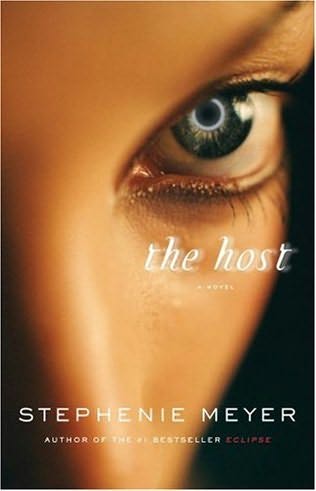 Cap off, heels together for Stephenie Meyer. Not content to write an edge-of-your-seat trilogy (saga, whatever), the prolific Ms. Meyer turns around and publishes something completely different, a (thick!) science-fiction-yet-more-than-that story that kept me reading until 2am.
(Yeah. Talk about literary hangover. Why do I insist on reading 600-page novels in eleven-hour sittings? With church the next morning?)
But wow. Wow, wow, wow.
Scoop of the e-e-evening: Savvy
 Reviewed by my 12-y/o sister, Rae, who is just starting to get into books (finally! *gasps a sigh of relief* ...I was afraid we had an aberration on our hands!).
Do you know what a savvy is? It is your specialty. Something you understand. Something that is your very own.
I loved the book Savvy. It was something new to me. I had never heard that word used before. When Noel gave me the book I thought, “Sure I’ll read it,” but once I began I couldn’t stop!
The book wasn’t just about one girl on her thirteenth birthday (although quite a bit of it was). It was also about her family. She had three brothers and one sisters. The oldest was Rocket, then Fish. Third was Mississippi (aka Mibs) fourth was Samson and last was Gipsy. Mibs is the one who is turning thirteen—which may seem normal to you, but in their family it was the day their lives changed forever.
One other reason I liked it is because once Mibs turns thirteen, she has to be homeschooled. Otherwise, who knows what could happen before she tames her savvy? The reason I like that is because I am homeschooled, so I know what it’s like.
Mid-Paradise Lost Musings
I’m only two books in, but Paradise Lost is Blowing. Me. Away. I foresee years of rereading.
I love listening to classic literature, hearing the flawless pronunciations and superlative intonations of a Really Good Narrator.
(Capitalizing those words makes me think of the Ugly-Wugly whose chief requirement of life was a Really Good Hotel. A completely irrelevant rabbit trail, but significant nonetheless. Because if you haven’t yet read Nesbit’s The Enchanted Castle, you will do so now—this minute. Well, after Paradise Lost, I guess.)
Back to Milton (the name of my town, btw. Ah, how I love my town!). I’ve never had wine but I imagine that Paradise Lost is exactly like the most ancient, exquisite, ripest of ripe wines. Each sentence is nonpareil.
The idea of fallen angels taking pagan form is mind-blowing. I’d heard similar ideas before, but Milton draws it out.
After these appeared
A crew who, under names of old renown—
Osiris, Isis, Orus, and their train—
With monstrous shapes and sorceries abused
Fanatic Egypt and her priests to seek
Their wandering gods disguised in brutish forms
Rather than human.
I can see, now, why Pullman was inspired to write His Dark Materials, though I wholly and cheerfully disagree with his conclusions. Milton is not canonizing Satan. He is not suppressing hero worship because of social mores. He simply fails to underestimate Satan—a feat rarely achieved by modern Christians. C.S. Lewis wrote those famous lines: “There are two equal and opposite errors into which our race can fall about the devils. One is to disbelieve in their existence. The other is to believe, and to feel an excessive and unhealthy interest in them.”
Milton recognized this years before Lewis, and he paints a true portrait of an amazingly complex being—aspiring to rule the universe, yet doomed to failure through his own pride and defiance. Our fallen natures sympathize with rebellion. Milton, however—at least, to my simple, uneducated mind—is setting out to show how distorted those tendencies are, and how truer and more beautiful an alternative is set before us.
And I’m only on book two!
I love listening to classic literature, hearing the flawless pronunciations and superlative intonations of a Really Good Narrator.
(Capitalizing those words makes me think of the Ugly-Wugly whose chief requirement of life was a Really Good Hotel. A completely irrelevant rabbit trail, but significant nonetheless. Because if you haven’t yet read Nesbit’s The Enchanted Castle, you will do so now—this minute. Well, after Paradise Lost, I guess.)
Back to Milton (the name of my town, btw. Ah, how I love my town!). I’ve never had wine but I imagine that Paradise Lost is exactly like the most ancient, exquisite, ripest of ripe wines. Each sentence is nonpareil.
The idea of fallen angels taking pagan form is mind-blowing. I’d heard similar ideas before, but Milton draws it out.
After these appeared
A crew who, under names of old renown—
Osiris, Isis, Orus, and their train—
With monstrous shapes and sorceries abused
Fanatic Egypt and her priests to seek
Their wandering gods disguised in brutish forms
Rather than human.
I can see, now, why Pullman was inspired to write His Dark Materials, though I wholly and cheerfully disagree with his conclusions. Milton is not canonizing Satan. He is not suppressing hero worship because of social mores. He simply fails to underestimate Satan—a feat rarely achieved by modern Christians. C.S. Lewis wrote those famous lines: “There are two equal and opposite errors into which our race can fall about the devils. One is to disbelieve in their existence. The other is to believe, and to feel an excessive and unhealthy interest in them.”
Milton recognized this years before Lewis, and he paints a true portrait of an amazingly complex being—aspiring to rule the universe, yet doomed to failure through his own pride and defiance. Our fallen natures sympathize with rebellion. Milton, however—at least, to my simple, uneducated mind—is setting out to show how distorted those tendencies are, and how truer and more beautiful an alternative is set before us.
And I’m only on book two!
Happy Birthday, America!
 "It is in vain, sir, to extenuate the matter. Gentlemen may cry, Peace, Peace but there is no peace. The war is actually begun! The next gale that sweeps from the north will bring to our ears the clash of resounding arms! Our brethren are already in the field! Why stand we here idle? What is it that gentlemen wish? What would they have? Is life so dear, or peace so sweet, as to be purchased at the price of chains and slavery? Forbid it, Almighty God! I know not what course others may take; but as for me, give me liberty or give me death!"
~Patrick Henry, March 23, 1775
The Great Gatsby
 When I was fourteen or fifteen, I tried reading The Catcher in the Rye. Alas, ye millions of Salinger fans, my chin fell to my chest and the book thudded to the floor. American classics often have this effect on me … Willa Cather? Gah. Hemingway? Gah. Steinbeck? Haven’t screwed my courage to the sticking place yet. Perhaps someday I’ll develop a taste for these celebrated men and women, but for now, I’ll love the one I’m with: namely, British classics.
All that to say, I listened to The Great Gatsby this week, every nerve steeled for a Catcher repeat, but glory be, five minutes of his mahogany prose jerked me awake. Fitzgerald can write!
[She] held my hand for a moment, looking up into my face, promising that there was no one in the world she so much wanted to see. That was a way she had. She hinted in a murmur that the surname of the balancing girl was Baker. (I’ve heard it said that Daisy’s murmur was only to make people lean toward her; an irrelevant criticism that made it no less charming.)
…
I looked back at my cousin, who began to ask me questions in her low, thrilling voice. It was the kind of voice that the ear follows up and down, as if each speech is an arrangement of notes that will never be played again. Her face was sad and lovely with bright things in it, bright eyes and a bright passionate mouth, but there was an excitement in her voice that men who had cared for her found difficult to forget: a singing compulsion, a whispered “Listen,” a promise that she had done gay, exciting things just a while since and that there were gay, exciting things hovering in the next hour.
The subject is bleak, yes, but somehow the rich tones of his writing lent a depth to otherwise depressing events. Even if I couldn’t care for any of his rotten characters I was in love with the prose itself. The Great Gatsby won’t be appearing on any of my Lists, but I hope the influence of Fitzgerald’s mellifluous pen will be seen in my own novel.
Mission Aborted
 I won’t deny it: Hugh Dancy is the reason I finally picked up Ursula Le Guin. Color me shallow, but I bet I wasn’t the only girl who crept into the SciFi section after seeing The Jane Austen Book Club. He should offer classes—“Tired of praising your favorite titles, only to watch patrons turn around and grab any random novel? Let me help you convince anyone to try that special book!”
So I read The Lathe of Heaven (mentioned in the movie). It wasn’t half bad. As dystopian novels go, it was quite good. I’m not usually picky when it comes to genres—I read pretty much anything … Nancy Drew, Bleak House, Eragon, Twilight. But then I started The Left Hand of Darkness (also mentioned in the movie). And I cannot finish it. Who knows, my perfectionist, complete-what-you-start neurosis might kick in tomorrow, but as of right now, Ursula Le Guin is taking a back seat.
Sorry, Hugh/Luke. I did bring her books into my home. That counts for something, right?
Subscribe to:
Posts (Atom)