How have I done on my 2008 reading resolutions? Fifteen down, eleven to go. Ignore the fact that four of those remaining eleven are about forty hours each. So ... not bad.
Check
KJV Bible: Matthew, Mark, Luke, John, Acts, Romans, Genesis, Exodus, Leviticus, Numbers, Deuteronomy, Proverbs, Psalms, Ecclesiastes, Song of Solomon, II Chronicles, Ezra
Iliad, by Homer
Bleak House, by Charles Dickens (because Soobie reads it in The Mennyms)
War and Peace, by Leo Tolstoy
Uncle Tom’s Cabin, by Harriet Beecher Stowe
The Killer Angels, Michael Shaara
Nineteen Eighty-Four, by George Orwell
Ivanhoe, by Sir Walter Scott
Man Who Was Thursday, by G.K. Chesterton
Scarlet Letter, Nathaniel Hawthorne
House of Seven Gables, by Nathaniel Hawthorne
Mansfield Park, by Jane Austen
84 Charing Cross Road, by Helene Hanff
All’s Well That Ends Well
Merchant of Venice
Two Gentlemen of Verona
Not Check
Rest of the KJV Bible
Don Quixote, by Miguel Cervantes
Les Miserables, by Victor Hugo
Paradise Lost, by John Milton
Moby Dick, by Herman Melville
The Brothers K, by Feodor Dostoevsky
The Great Gatsby, by John Fitzgerald
Rob Roy, by Sir Walter Scott
The Mind of the Maker, by Dorothy Sayers
Brave New World, by Adolph Huxley
Antony and Cleopatra
Comedy of Errors
June Reading Log
* Denotes a title I resolved to read this year
Scoop of the e-e-evening: Bleak House
 (An Eloise-inspired review.)
Oh my lord I love love love Dickens. I spent rawther a lot of time with my ipod this month for instance every day I had to go to the laundry room and fold laundry for a few hours even when I’d already folded it all. And here’s the thing of it: Mrs. Bagnet is such the best.
I had to put the book on pause every time I vacuumed, so you can see it was an extremely lot of extra work to read Bleak House. But worth it.
Mr. Vholes takes off his gloves as if he were skinning his hands.
Here’s what I like:
[The rooms] were excessively bare and disorderly, and the curtain to my window was fastened up with a fork.
He was very good except that he brought down Noah with him (out of an ark I had given him before we went to church) and would dip him head first into the wine-glasses and then put him in his mouth.
“My friends,” says Mr. Chadband, “what is this which we now behold as being spread before us? Refreshment. Do we need refreshment then, my friends? We do. And why do we need refreshment, my friends? Because we are but mortal, because we are but sinful, because we are but of the earth, because we are not of the air. Can we fly, my friends? We cannot. Why can we not fly, my friends?” Mr. Snagsby, presuming on the success of his last point, ventures to observe in a cheerful and rather knowing tone, “No wings.”
“Old girl,” says Mr. Bagnet, “give him my opinion. You know it. Tell him what it is.”
.
Some people think Dickens is boring boring boring. But I say I’ll have The Pickwick Papers and The Old Curiosity Shop and Nicholas Nickleby merci and charge it please.
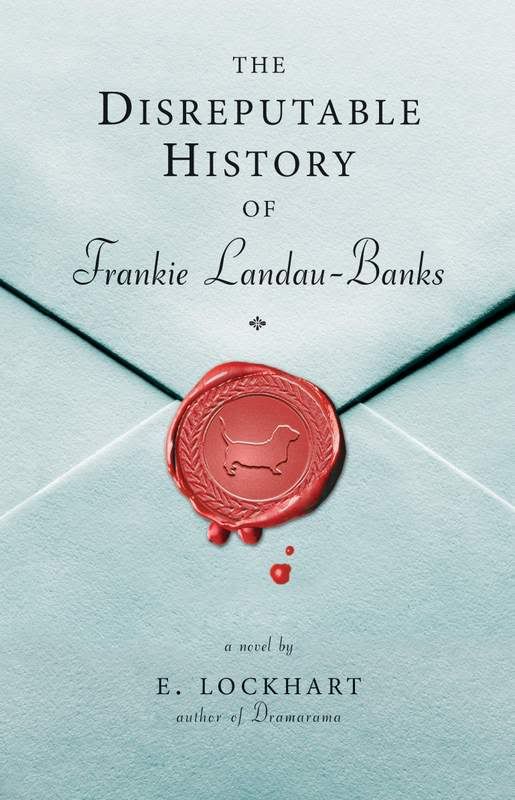
Scoop of the e-e-evening: The Disreputable History of Frankie Landau-Banks
 Frankie Landau-Banks at age 14: Debate Club. Her father’s “bunny rabbit.”
A mildly geeky girl attending a highly competitive boarding school.
Frankie Landau-Banks at age 15:
A knockout figure.
A sharp tongue.
A chip on her shoulder.
And a gorgeous new senior boyfriend: the supremely goofy, word-obsessed Matthew Livingston.
Frankie Laundau-Banks.
No longer the kind of girl to take “no” for an answer.
Especially when “no” means she’s excluded from her boyfriend’s all-male secret society.
Not when her ex boyfriend shows up in the strangest of places.
Not when she knows she’s smarter than any of them.
When she knows Matthew’s lying to her.
And when there are so many, many pranks to be done.
Frankie Landau-Banks, at age 16:
Possibly a criminal mastermind.
This is the story of how she got that way.
This novel had everything going for it: private school, underground tunnels, teenage heroine reading P.G. Wodehouse, moments that made you think, even provided considerable insight. I spent hours enjoying every page. Halfway through, however, things began to dwindle, peak and pine.
There were good chunks that I thoroughly savored:
Frankie livening her conversation with neglected positives like “gruntled” (as in, opposite of disgruntled).
The concept of the panopticon—because there’s always the possibility of someone watching, we live as though someone is, sticking to unwritten rules despite their unofficial status.
Frankie’s way of internally reviewing her options before she speaks:
Could say: “Here I am.”
Veto. Sounds coy.
Could say: “Of course I came.”
Veto. Sounds like I idolize him.
Could say: “Why wouldn’t I?”
Veto: He’ll feel awkward answering that question.
Could change the subject.
Veto. People like to be listened to.
Could say: “I’ve never been to a party on the golf course.”
Veto. Too juvenile.
Could say instead: “I’m always up for a party.”
Veto. Too irksome. Plus, sounds like I went to lots of parties last year, which he’ll soon find out I didn’t.
I need to make him laugh. And I need to unsettle him enough so that he’s not entirely certain I like him.
Golf. The golf course.
“I’m a halfway decent golfer,” said Frankie after only a 2.8 second pause. “I never turn down the chance to play a few holes.”
But then stuff started bugging me. The stakes weren’t high enough, for one thing. Frankie enjoyed being notorious, but is there a point to being notorious for getting a salad bar in the cafeteria? Where’s the triumph in that, seriously?
Lockhart’s reverse-feminism bugged me, too. By definition, feminism should celebrate the distinctive aspects of womanhood. Instead, this heroine degrades her sex by esteeming acceptance into a male fraternity above anything else. Frankie is infuriated when her friend prefers making rhubarb crumble to being included in a boys’ club. This implies that traditional female pursuits are intrinsically less valuable than traditional male pursuits.
Reading this novel was certainly not unpleasant, but in the end, I was far from gruntled. Lockhart’s auspicious beginning set me up for a grand finale, but unfortunately, her fireworks fizzled.
Childhood Heroes
 Not really book-related, but ... oh, wait! She has an auto, Voice of an Angel: My Life (So Far), oh, and, hmm, here's another auto, Keep Smiling, but anyway:
I loved, loved, loved Charlotte Church when I was thirteen. (And fourteen. And fifteen.) You probably heard me scream when I got tickets to her performance at the Chicago Theater. She introduced me to Carrickfergus. Then she went pop. And now ... she's a mum. Twice over. Wow.
Just thought you might like to know.




Extra! Extra!
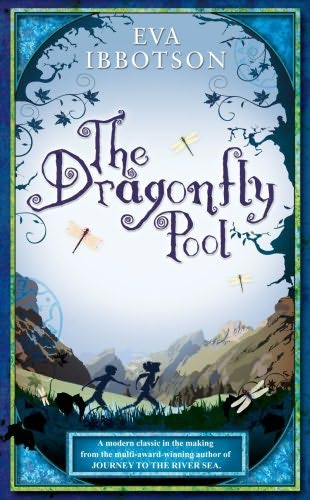 There's a new Eva Ibbotson!!!! (Breathe, Noel, breathe.)
From The Globe and Mail:
THE DRAGONFLY POOL
By Eva Ibbotson, Macmillan, 397 pages, $22.95, ages 9 to 12
This newest of Eva Ibbotson's books - its most recent predecessor was the much-lauded Journey to the River Sea - has all the attributes of a splendid summer read. It has length going for it, making it a book from which readers will only want to come up for air occasionally and only to assure themselves that the known world still exists.
Like its predecessor, its central character is a girl, a rather exceptional one with a mind of her own and way of doing things that ensures that she is what we might call, in today's jargon, "effective." Eleven-year-old Tally, who lives in London with her widowed father, a doctor, and two devoted maiden aunts, is instantly likeable, independent-minded, "good" but not "goody-good." She is the sort of person with whom any reader would want to travel 397 pages.
And then there's the story, which is slightly old-fashioned, in the best sense of the word. It begins in 1939, in the first uneasy days of the Second World War and unfolds in rapid, imaginative leaps that do not ever really challenge the readers' capacity for disbelief. The bold outlines of the plot include Tally's being evacuated to a school in Devon, not to her cousins' feeder for Eton school, but to what might today be called an alternative school. It resembles Dartington Hall, which actually exists, but is called Delderton Hall, and it is the home of a number of "interesting" children and their eccentric teachers. Experiential learning is the presiding educational philosophy.
All of this is background to the main thrust of the story, which occurs as a result of a school trip to a small European kingdom called Bergania. Tally happens to meet and befriend Karil, the young son of the King, and in her plucky way is instrumental in smuggling him out of the country when the King is shot and killed by invading Germans.
Once he arrives in England, Karil is sequestered by the down-at-heel but very snobby members of Berganian nobility living in London, and seems lost forever to his new friends from Delderton Hall, especially Tally. Many a tale hangs on the reunification of the friends and the restoration of Karil to his rightful place in his homeland, all of them a treat.
Thump-thump
Alex Rider is a hot series at the library this summer. Until recently, I assumed everybody knew about the film. Then I met a teacher who gaped and gasped, "There's a movie?"

Um, yes. A kicking movie, might I add. (British) action, (British) scenery, (British) accents, (British) gadgets, but most importantly of all,
(British) Alex Pettyfer.
.
I'm not one to get celebrity crushes. But this ... how can you resist this? He's starring with Emma Roberts in November's Wild Child. British boarding schools, British scenery, British accents, British Alex Pettyfer. Wave me off to the cinema.

Take Joy
 Tasha Tudor died on Wednesday. I loved A is for Annabelle, among many others, when I was little. Recently, an elderly friend lent me her copy of Take Joy, a video glimpse into Tasha's daily routine. Find this film, rent it and remember a lovely woman who took joy from every moment of her life.
.
(Wonderful bit in the NY Times. I do indeed hope that Tasha's son is right in advising people to take his mother's "more colorful remarks" with a pinch of salt. It saddened me to hear her put such simple faith in the belief that she was the reincarnation of an 18oo's sea captain’s wife ("from Ipswich"). But it's quite possible she was laughing up her sleeve the whole time. I do hope she was.)
.
"If one advances confidently in the direction of his dreams, and endeavors to live the life which he has imagined, he will meet with a success unexpected in common hours."
Henry David Thoreau
Post-Wodehouse Musings
Just finished my first Wodehouse (the only Wodehouse the library had). As a whole, The Plot That Thickened isn't impressive, but the prose, man. The prose!
Wodehouse's knowledge of literature is enough to make one weep ... he randomly mentions a business man importing "ivory, apes and peacocks." Today I listened to II Chronicles and heard with incredulity that Solomon imported "ivory, apes and peacocks."
"Go, woman," one character tells his wife, "go and sin no more."
That same wife is called out of town just when her husband is lamenting her hold over his diet. He stares dazedly into space, and then murmurs, "I do believe in fairies!"
For every reference I'm not including, there are probably three I didn't even catch. The fun thing is, Wodehouse's voice is exactly the voice I was hearing, albeit faintly and with miles less flourish, for a character in my book. Wonderful resource!
Wodehouse's knowledge of literature is enough to make one weep ... he randomly mentions a business man importing "ivory, apes and peacocks." Today I listened to II Chronicles and heard with incredulity that Solomon imported "ivory, apes and peacocks."
"Go, woman," one character tells his wife, "go and sin no more."
That same wife is called out of town just when her husband is lamenting her hold over his diet. He stares dazedly into space, and then murmurs, "I do believe in fairies!"
For every reference I'm not including, there are probably three I didn't even catch. The fun thing is, Wodehouse's voice is exactly the voice I was hearing, albeit faintly and with miles less flourish, for a character in my book. Wonderful resource!
I'm Up At Novel Journey Today
Read an interview with Jessica Day George, author of the lovely Sun and Moon, Ice and Snow.
BBC Northanger Abbey

Have you seen the new version? Oooh, it's lovely.
.
"Perhaps after all it is possible to read too many novels."
Scoop of the e-e-evening: Something Rotten
 "Pulp Shakespeare," says Mr. Gratz.
Love that, say I.
Shakespeare junkies will have mucho fun with this novel, the first in a projected series of Horatio Wilkes mysteries (Something Wicked is next in line ... huzzah!).
Something is rotten in Denmark, Tennessee, and it is not just the polluted Copenhagen River. Hamilton Prince's father has been murdered, according to a hidden video message. Horatio Wilkes, Hamilton's best friend, is visiting the Prince mansion when the video turns up. The guys need to find the killer before he strikes again.
But it won't be easy. Suspects are plentiful. Olivia Mendelssohn may be hot (and Hamilton's ex-girlfriend), but she's also an environmentalist determined to clean up the river that the Prince paper plant has been polluting for decades. Trudy, Hamilton's mom, has recently married her husband's brother, Claude, and signed over half of the plant and its profits to him. Not to mention Ford N. Branff, media mogul and Trudy's college flame, who wants to buy the plant for himself. The question is motive, and Horatio Wilkes is just the kind of guy who can find things like that out. Doesn't matter that he's only a junior in high school.
Giving Hamlet a modern setting really reminds you how strong Shakespeare's plots are, how he sustains high-pitch action throughout a tale. When you know a story well, it loses some of its reread potency, but Gratz twists things until readers see with fresh color.
All I have to say about Something Rotten is this is how Shakespeare should be introduced to the millions of high school freshmen in America. I mean, why shouldn't 14 year old boys despise the Bard when their first encounter involves such smarmy stuff as, "Romeo, Romeo, wherefore art thou Romeo?" Give them Something Rotten, then go to a live production of Hamlet, and then read the play.
Note: Yes, there is language, but all in all, it's what you'd expect from the cover. Something Wicked, on the other hand, from the excerpt I read, may not continue the "integrity" of its predecessor.
This Has Been Known Since February and Only Now I'm Finding Out?
From CynopsisKids:
"20th Century Fox films options the feature film rights for The Adoration of Jenna Fox, author Mary Pearson's new young adult novel, in a mid to high six figures deal. Published by Henry Holt Books for Young Readers, The Adoration of Jenna Fox is schedule for release on April 29, 2008. Brad Silberling is set to direct the live-action movie, with Julia Pistor producing, and a writer deal set to be announced soon. The book is set in the near future and revolves around Jenna, a teenage girl who, like most teens, is trying to figure out who she is and how she fits in, but it this is a huge task for Jenna because she has just woken from a year-long coma and she remembers nothing about who she is, or was."
!!!
"20th Century Fox films options the feature film rights for The Adoration of Jenna Fox, author Mary Pearson's new young adult novel, in a mid to high six figures deal. Published by Henry Holt Books for Young Readers, The Adoration of Jenna Fox is schedule for release on April 29, 2008. Brad Silberling is set to direct the live-action movie, with Julia Pistor producing, and a writer deal set to be announced soon. The book is set in the near future and revolves around Jenna, a teenage girl who, like most teens, is trying to figure out who she is and how she fits in, but it this is a huge task for Jenna because she has just woken from a year-long coma and she remembers nothing about who she is, or was."
!!!
Dickinson Friday: 177
 Ah, Necromancy Sweet!
Ah, Wizard erudite!
Teach me the skill,
That I instil the pain
Surgeons assuage in vain,
Nor Herb of all the plain
Can Heal!
Scoop of the e-e-evening: On the Edge of the Dark Sea of Darkness
 It took me awhile to get into this book. There are three prologues, each increasingly tongue-in-cheek, and by the time I reached chapter one, I was a bit impatient with Mr. Peterson. If this was going to be an endless gag-reel (think Goldman), I wasn’t really interested. But with the genuine beginning, things warmed up.
Once, in a cottage above the cliffs on the Dark Sea of Darkness, there lived three children and their trusty dog Nugget. Janner Igiby, his brother Tink, their crippled sister Leeli are gifted children as all children are, loved well by a noble mother and ex-pirate grandfather. But they will need all their gifts and all that love to survive the evil pursuit of the venomous Fangs of Dang who have crossed the dark sea to rule the land with malice and pursue the Igiby's who hold the secret to the lost legend and jewels of good King Wingfeather of the Shining Isle of Anniera.
There are some great elements—a black carriage that rides through the land each night, stealing children from their beds. Peet, the town’s potty Sock Man who wears knitted socks over his hands. A deserted, crumbling manor at the edge of a forest, a system of bridges through the treetops.
I liked how Peterson gave Tink, the hero’s younger brother, his share of smarts. So many times, the oldest child possesses all the courage, cunning and sagacity, while any younger siblings follow dumbly in his wake. In this story, however, Tink is almost co-hero material.
I have to say I’m not a footnote fan. There are moments when they hit the spot—break up sagging narrative at just the right moment, add a bit of trivia. Moments only, though. An example of one that worked:
Oskar closed his eyes with a finger the in air. “Ah! That’s it. ‘Like it or not, the dog stays outside.’ A wise fellow, Yakev was.” 1
1 Yakev Brrz abhorred all manner of animal abuse, most of all the habit of referring to pets as “baby” and attributing to them human characteristics. Yakav’s first wife, Zaga, esteemed her two Beckitt Terriers so much that she insisted they sit at the table with them at dinner and that they sleep at the foot of their bed. Yakev … failed to convince Zaga that her “babies” … would much rather have not worn the matching lavender lace pajamas to sleep in their bed. Late one fateful night, when Zaga was fast asleep, Yakav tiptoed to the foot of the bed, gathered Schpoontzy and Kiki in his arms, carried them outside, drew from his sleeve a sharp knife, and put them out of their misery. Which is to say that he cut the lavender lace pajamas from the oppressed dogs and set them running free in the moonlight, never to return….
As you might guess, however, after a few dozen such pages you stop reading the footnotes.
There were times when the action seemed repetitive—captured by Fangs, rescued by Peet, captured by Fangs, rescued by Peet. But all in all, “rip-roaring” is the phrase that comes to mind. A fun, flavorful world for a debut novelist, most assuredly. (First in a series.)
Tall Yellow Boots

I had a Batgirl moment today ... one of the adult librarians came down, hunting for an inter-library loan request. My boss was searching with her, and as I passed by, I heard her say "Andrews Edwards."
.
Ping! went my brain.
.
Julie Andrews Edwards.
.
Last of the Really Great Wangdoodles.
.
And I continued on my way, mentally shaking my head, because they weren't even looking in the right room for that book. On my way back, however, I grabbed Wangdoodles, just in case, and stopped behind the two ladies, still bent over picture books.
.
"I heard you say Andrews Edwards. Are you looking for her Dumpy books?"
.
"No," they replied, "something called The Last of the Really Great Wangdoodles."
.
With a subtle smile, I handed it over, turned on my heel and melted into the stacks.
.
Super librarians forever!
.
My sister's like, "Geez, Noel. You are so vain."
Subscribe to:
Posts (Atom)