(last half of November, anyway)
Up a Road Slowly, by Irene Hunt
Eggs, by Jerry Spinelli
Feathers, by Jacqueline Woodson
Autobiography of Rev. Charles G. Finney
Miss Spitfire, by Sarah Miller
Emma Jean Lazarus Fell Out of a Tree, by Lauren Tarshis
Book of a Thousand Days, by Shannon Hale
Back-Room Review: Beauty
 Sometimes I worry about Back-Room Books. Sure, they’re already on shelf, already established, and don’t need the buzz Up-and-Coming Wonders require. Or do they? Every once in a while I stumble across an ugly paperback that hasn’t been checked out in years. The title’s familiar, but as to being any good, I haven’t the foggiest. Back on the shelf it goes—and I miss something amazing. (Blast that library godmother. She’s supposed to give neglected gems an effervescent glow.) Maybe I’m just ignorant—after all, 1 in 49 people I meet have read “Roller Skates.” But in the absence of signs and wonders, it would be lovely for librarians to shine a little light on back-room stacks. Notwithstanding their dusty appearance, some novels shouldn’t be missed.
Beauty, by Robin McKinley
Beauty isn’t a beauty. Her nickname is only the result of kind, wry humor. She is good, however, and when her merchant father sets sail for foreign lands, she asks him to bring back a rose.
McKinley might not alter much of the original plot, but the reassuring familiarity of her story is like a bowl of steamy rice pudding (the novel is perfectly enjoyed alongside that comfort, by the way. See recipe below). Delicious prose is reason enough to read a fairy tale; small delights, such as a castle library replete with past and future classics, just add to the book’s charm.
Beauty was written long before the recent crop of fairy tale retellings, whose twists and unexpected departures seem necessary to sustain interest in the “same old story.” McKinley obviously did not intend to put a new spin on a familiar plot, but to remind readers of the simple beauty every fairy tale holds, common loveliness, preserved by thousands of peddlers, housewives, cooks, and nurses. Beauty is McKinley’s performance beside the fire, imparting the story to yet another generation of imaginations.
Stirred Rice Pudding
You have never had rice pudding. Seriously. The cool thing this recipe is, you stir for an hour—prime reading time. (Just ask Eudora Welty’s mother. She always read while baking.) An hour into Beauty, and you’re ready to cozy up with a bowl of hard-earned scrumptiousness, never to rise until you’ve finished the book.
2 c. water
1 c. uncooked rice (not instant)
2 c. whole milk
3 c. half-and-half (so worth it)
2/3 c. white sugar
1 ½ tsp. vanilla extract
Bring water to boil in large, heavy bottomed pan. Stir in rice. Cover and simmer over low heat until water is almost fully absorbed, about 25-30 minutes.
Add milk, half-and-half, and sugar. Increase heat to medium-high to bring to a simmer, then reduce to maintain simmer. Cook uncovered, stirring frequently, until mixture starts to thicken, about 45 minutes. Reduce heat to low and continue to cook, stirring every few minutes to prevent sticking, until mixture is thick and all liquid has been absorbed (mine doesn’t absorb completely, but as it sets, it thickens), about ten minutes. Remove from heat and stir in vanilla extract. Spoon into serving dish and remove self to deep armchair.
Serves 8 to 10
You have never had rice pudding. Seriously. The cool thing this recipe is, you stir for an hour—prime reading time. (Just ask Eudora Welty’s mother. She always read while baking.) An hour into Beauty, and you’re ready to cozy up with a bowl of hard-earned scrumptiousness, never to rise until you’ve finished the book.
2 c. water
1 c. uncooked rice (not instant)
2 c. whole milk
3 c. half-and-half (so worth it)
2/3 c. white sugar
1 ½ tsp. vanilla extract
Bring water to boil in large, heavy bottomed pan. Stir in rice. Cover and simmer over low heat until water is almost fully absorbed, about 25-30 minutes.
Add milk, half-and-half, and sugar. Increase heat to medium-high to bring to a simmer, then reduce to maintain simmer. Cook uncovered, stirring frequently, until mixture starts to thicken, about 45 minutes. Reduce heat to low and continue to cook, stirring every few minutes to prevent sticking, until mixture is thick and all liquid has been absorbed (mine doesn’t absorb completely, but as it sets, it thickens), about ten minutes. Remove from heat and stir in vanilla extract. Spoon into serving dish and remove self to deep armchair.
Serves 8 to 10
From Debbie Puente’s Elegantly Easy Crème Brulèe and Other Custard Desserts
Besides my favorite authors of all time, most of which I discovered as a middle-grade reader and teenager, I have random, more recent loves:
I Capture the Castle, by Dodie Smith
Jellicoe Road, by Melina Marchetta
The Year of Secret Assignments, by Jaclyn Moriarty
The Penderwicks on Gardam Street, by Jeanne Birdsall
Cosmic, by Frank Cottrell Boyce
Framed, by Frank Cottrell Boyce
Masterpiece, by Elise Broach
Trouble, by Gary Schmidt
We Have Always Lived in the Castle, by Shirley Jackson
Leepike Ridge, by N.D. Wilson
Roller Skates, by Ruth Sawyer
The Boneshaker, by Kate Milford
Fly by Night, by Frances Hardinge
Saving Francesca, by Melina Marchetta
Any Which Wall, by Laurel Snyder
The Mostly True Adventures of Homer P. Figg, by Rodman Philbrick
When You Reach Me, by Rebecca Stead
The Evolution of Calpurnia Tate, Jacqueline Kelly
I Capture the Castle, by Dodie Smith
Jellicoe Road, by Melina Marchetta
The Year of Secret Assignments, by Jaclyn Moriarty
The Penderwicks on Gardam Street, by Jeanne Birdsall
Cosmic, by Frank Cottrell Boyce
Framed, by Frank Cottrell Boyce
Masterpiece, by Elise Broach
Trouble, by Gary Schmidt
We Have Always Lived in the Castle, by Shirley Jackson
Leepike Ridge, by N.D. Wilson
Roller Skates, by Ruth Sawyer
The Boneshaker, by Kate Milford
Fly by Night, by Frances Hardinge
Saving Francesca, by Melina Marchetta
Any Which Wall, by Laurel Snyder
The Mostly True Adventures of Homer P. Figg, by Rodman Philbrick
When You Reach Me, by Rebecca Stead
The Evolution of Calpurnia Tate, Jacqueline Kelly
To the Thanksgiving Feast bring Five Kernels of Corn!
Five Kernels of Corn
by Hezekiah Butterworth
by Hezekiah Butterworth

'Twas the year of the famine in Plymouth of old,
The ice and the snow from the thatched roofs had rolled,
Through the warm purple skies steered the geese o'er the seas,
And the woodpeckers tapped in the clocks of the trees;
And the boughs on the slopes to the south winds lay bare,
and dreaming of summer, the buds swelled in the air.
The pale Pilgrims welcomed each reddening morn;
There were left but for rations Five Kernels of Corn.
Five Kernels of Corn!
Five Kernels of Corn!
But to Bradford a feast were Five Kernels of Corn!
"Five Kernels of Corn! Five Kernels of Corn!
Ye people, be glad for Five Kernels of Corn!"
So Bradford cried out on bleak Burial Hill,
And the thin women stood in their doors, white and still."
Lo, the harbor of Plymouth rolls bright in the Spring,
The maples grow red, and the wood robins sing,
The west wind is blowing, and fading the snow,
And the pleasant pines sing, and arbutuses blow.
Five Kernels of Corn!
Five Kernels of Corn!
To each one be given Five Kernels of Corn!"
O Bradford of Austerfield hast on thy way,
The west winds are blowing o'er Provincetown Bay,
The white avens bloom, but the pine domes are chill,
And new graves have furrowed Precisioners' Hill!"
Give thanks, all ye people, the warm skies have come,
The hilltops are sunny, and green grows the holm,
And the trumpets of winds, and the white March is gone,
Five Kernels of Corn!
Five Kernels of Corn!
Ye have for Thanksgiving Five Kernels of Corn!
"The raven's gift eat and be humble and pray,
A new light is breaking and Truth leads your way;
One taper a thousand shall kindle; rejoice
That to you has been given the wilderness voice!"
O Bradford of Austerfield, daring the wave,
And safe through the sounding blasts leading the brave,
Of deeds such as thine was the free nation born,
And the festal world sings the "Five Kernels of Corn."
Five Kernels of Corn!
Five Kernels of Corn!
The nation gives thanks for Five Kernels of Corn!
To the Thanksgiving Feast bring Five Kernels of Corn!
Little Beauties: L.M. Montgomery

by Lucy Maud Montgomery
 It is small and dim and shabby -- just one old, low-corniced room,
With the plaster stained and broken and the corners lost in gloom:
And one square, uncurtained window, where a sea-born sunset shines
In a glow of chastened splendor though grand cathedral pines.
But 'tis dear and sacred to me, plain and dusky tho' it be,
For the best of friends and comrades hither come to meet with me.
And I welcome them right gladly when the lingering daylight falls
On the old, familiar faces of my books along the walls.
And one square, uncurtained window, where a sea-born sunset shines
In a glow of chastened splendor though grand cathedral pines.
But 'tis dear and sacred to me, plain and dusky tho' it be,
For the best of friends and comrades hither come to meet with me.
And I welcome them right gladly when the lingering daylight falls
On the old, familiar faces of my books along the walls.
Matchless tales of lands far distant; ballads of an olden day,
Full of fire and faith and fervor that no time can steal away:
Songs of many gracious poets: rare old essays richly blent
With the legendary lore of orient and occident:
Tales of wonderful adventures in the merry years of yore,
And of half-forgotten battles lost and won by sea and shore;
Classic myth and stately epic, born of earth-old joy or pain --
All the centuries have left us, I may gather here again.
Here with hosts of friends I revel who can never change or chill;
Though the fleeting years and seasons they are fair and faithful still!
Kings and courtiers, knights and jesters, belles and beaux of far away,
Meet and mingle with the beauties and the heroes of to-day.
All the lore of ancient sages, all the light of souls divine,
All the music, wit and wisdom of the gray old world is mine,
Garnered here where fall the shadows of the mystic pineland's gloom!
And I sway an airy kingdom from my little book-lined room.
A Taste of ... Twelfth Night, Cousin-Style
The Cousin Drama Club has put page to stage for years--only recently have we filmed our endeavors (lapse in sanity). Late 2006 we wrapped our enormous, 18-month long production of C.S. Lewis' The Lion, the Witch, and the Wardrobe. This year, we decided to reward ourselves with something a bit easier and, consequently, enjoyable: Shakespeare. Thanks to Lois Burdett's Shakespeare Can Be Fun series, twelve cousins had a blast lifting the bard from the page and putting him where he belongs ... in front of an audience.
Scoop of the e-e-evening: "Epic"
 My dear little brother, Robbie, has agreed to share his book thoughts now and then. This boy reads everything--Hardy Boys to David Copperfield to Pride and Prejudice (I told him reading that one would really expand his marriage prospects). Lots of librarians review books, but it's always interesting to hear what the target audience has to say. So without further ado, a 14-year-old's take on "Epic" by Conor Kostick.
Epic is a RPG that reflects life. How you perform in Epic determines how you get on in real life. The game is New World's government--the best players rule the game, which also means they rule the real world, too. There is no money in real life, you have money in Epic and that is all. If you file a complaint, you fight it out in Epic's arena. That was how life had been and that was how most everyone thought it would continue.
But when Eric and his friends, the Osterfjord Players, discover how to defeat the dragon Inry'aat and take possession of its hoard, a group of the world's top players, Central Allocations, starts to get nervous. With their riches, the Osterfjord Players are able to buy the best equipment the game has to offer. With that, they become a threat to Central Allocations.
As Eric and his friends rise to fame, they start to look around themselves, and slowly realize just how corrupt New World has become because of Epic. People spend every minute of their free time playing Epic. It is no longer just a game, but a way for the greedy to gain as much power as possible.
The struggle for power ends up in full-fledged war, with the C.A. against the Osterfjord Players and as many other players as they can muster. In the end, Eric must resort to one last extreme to save the world: destroy Epic.
National Book Awards -- Young People's Literature
 I'm not usually impressed by ethnic books. You know the scene from “Walk Two Moons,” the part that goes, “That night we stayed in Injun Joe's Peace Palace Motel. On a sign in the lobby someone had crossed out “Injun” and written “Native American” so the whole sign read: “Native American Joe's Peace Palace Motel.” In our room, the “Injun Joe's” embroidered on the towels had been changed with black marker to “Indian Joe's.”” I love how Creech shows the idiocy of political correctness. Such writing is a rarity when ethnic issues are involved. So even though "The Absolutely True Diary of a Part-Time Indian" has generated lots of buzz, I haven't read it. Sherman Alexie did spark my interest, though, with this comment on his protagonist: "I suppose Arnold would think that literacy is a form of self-defense. If one reads enough books one has a fighting chance. Or better, one's chances of survival increase with each book one reads." I guess I'll be giving the book a try. I just hope Alexie didn’t use any black markers on his MS.
Paradise, Take Two
 You know the verse.
“And the serpent said unto the woman, Ye shall not surely die: for God doth know that in the day ye eat thereof, then your eyes shall be opened, and your daemons shall assume their true forms, and ye shall be as gods; knowing good and evil.”
Not quite how you remembered it?
The biblical quote was tweaked by children’s author Phillip Pullman, whose fantasies are set to revisit the world December 7th, as New Line Cinema releases their version of Pullman’s celebrated novel, The Golden Compass. In an alternate England where Church is State and every human is attended by an animal counterpart, or daemon, the film tells of an orphan girl who travels from Oxford to the North in search of a kidnapped friend. Along the way she discovers comrades among the oppressed and enemies among the oppressors.
A common storyline. What is everyone so upset about? According to Catholics, Pullman might have been a bit nicer to the Church (they’re his villains), but isn’t it just make-believe? Perhaps.
For hundreds of years, make-believe places—Heorot to Middle Earth—have given us a clearer view of our own world. Readers set aside everyday life to peer onto another stage, where right and wrong are played out unequivocally, and when the curtains close, we love good all the more having known men like Aragon, and despise evil worse than ever having confronted murderers like the Nine. Young imaginations are especially receptive of supposals, as Jesus recognized when he told followers to receive the kingdom of God as little children.
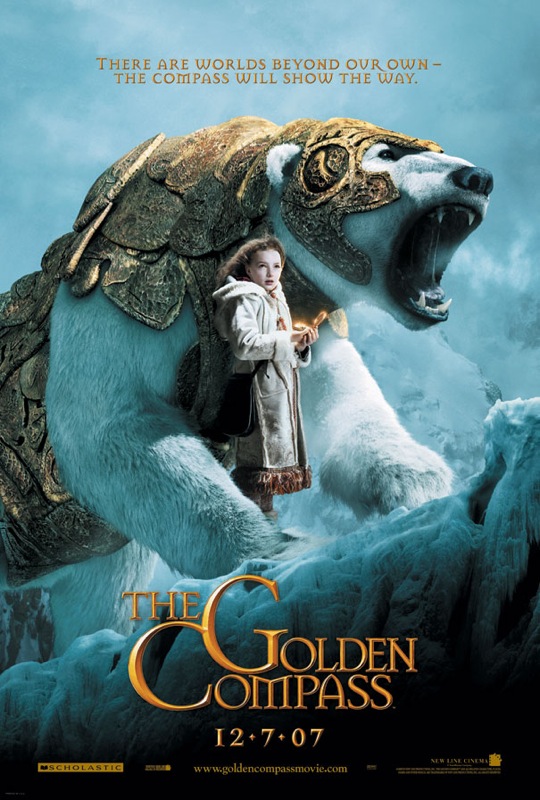
But what if a writer, harnessing fantasy’s power, invited kids to suspend traditional beliefs about God, authority and growing up, for completely new assumptions? Just as the serpent whispered, Ye shall not surely die, the stories of such an author could circulate a new paradigm where a loving, omnipotent God and an afterlife in heaven were cruel lies. Consequently, man’s rebellion against God would be revealed as a liberation from Him, with Eve becoming a heroine who rejected blind obedience for the sake of curiosity and an inquiring mind. That writer is Phillip Pullman.
The Golden Compass is his auspicious opening of an increasingly didactic trilogy geared toward young readers. The engaging plot, action and colorful characters hook children, but Pullman’s conclusion recasts truth and fails to deliver. Promising adventures turn into the disposal of a pathetic Ancient of Days, the exposure of the myths of heaven and hell, and the establishment of a society for mortals to utopianize until their atoms pass on to flowers and trees. Pullman may twist classic lines, but his additions don’t enhance anything. Instead, young readers are left with a world devoid of hope and happy endings, where nothing is eternal except the present delight.
Filmmakers are adamant that their production of The Golden Compass dilutes Pullman’s hostile representation of the Church. In making their film more kid-friendly, they also removed the disturbing death portrayed in the novel’s final scene. While these decisions may yield a PG rating and fewer offended churchgoers, children whose imaginations are stirred by the cinema will certainly devour Pullman’s trilogy, where they’ll learn “the Christian religion is a very powerful and convincing mistake, that’s all.” Heroes will assure them, “We shouldn’t live as if [heaven] mattered more than this life in this world.” Pullman’s Great Supposal stamps pliable minds with secular humanism.

Practiced Christians who read the trilogy face little danger—Pullman’s inversions ring hollow because they’re not true forms. Thanks to God’s unchanging Word, we know good and evil. We know that when the term is over, the holidays begin. But via Phillip Pullman, countless young people are discovering that religion is a ridiculous lie. The alternative His Dark Materials offers is the alternative these children embrace: “build the Republic of Heaven where [you] are, because for us there is no elsewhere.” We’re all the gods this world will ever know, Pullman concludes, and today is our only time on stage. Shouldn’t Christians call out, “Cut!”?
Never Jam Today Book Reviews
Middle Grade
100 Cupboards, by N.D. Wilson
Anne of Green Gables, by L.M. Montgomery
Any Which Wall, by Laurel Snyder
Be a Genie in Six Easy Steps, by Steve Cole & Linda Chapman
Beauty, by Robin McKinley
Betsy-Tacy, by Maud Hart Lovelace
Bran Hambric: The Farfield Curse, by Kaleb Nation
The Chestnut King, by N.D. Wilson
Cosmic, by Frank Cottrell Boyce
Dandelion Fire, by N.D. Wilson
The Dragonfly Pool, by Eva Ibbotson
The Evolution of Calpurnia Tate, by Jacqueline Kelly
Framed, by Frank Cottrell Boyce
The Graveyard Book, by Neil Gaiman
Gullstruck Island, by Frances Hardinge
Hang a Thousand Trees with Ribbons, by Ann Rinaldi
Kiki Strike: Inside the Shadow City, by Kirsten Miller
The Last Olympian, by Rick Riordan
Leaving the Bellweathers, by Kristin Clark Venuti
The Lightning Thief, by Rick Riordan
Magickeepers: The Eternal Hourglass, by Erica Kirov
Masterpiece, by Elise Broach
The Mennyms, by Sylvia Waugh
100 Cupboards, by N.D. Wilson
Anne of Green Gables, by L.M. Montgomery
Any Which Wall, by Laurel Snyder
Be a Genie in Six Easy Steps, by Steve Cole & Linda Chapman
Beauty, by Robin McKinley
Betsy-Tacy, by Maud Hart Lovelace
Bran Hambric: The Farfield Curse, by Kaleb Nation
The Chestnut King, by N.D. Wilson
Cosmic, by Frank Cottrell Boyce
Dandelion Fire, by N.D. Wilson
The Dragonfly Pool, by Eva Ibbotson
The Evolution of Calpurnia Tate, by Jacqueline Kelly
Framed, by Frank Cottrell Boyce
The Graveyard Book, by Neil Gaiman
Gullstruck Island, by Frances Hardinge
Hang a Thousand Trees with Ribbons, by Ann Rinaldi
Kiki Strike: Inside the Shadow City, by Kirsten Miller
The Last Olympian, by Rick Riordan
Leaving the Bellweathers, by Kristin Clark Venuti
The Lightning Thief, by Rick Riordan
Magickeepers: The Eternal Hourglass, by Erica Kirov
Masterpiece, by Elise Broach
The Mennyms, by Sylvia Waugh
The Mostly True Adventures of Homer P. Figg, by Rodman Philbrick
On the Edge of the Dark Sea of Darkness, by Andrew Peterson
The Penderwicks on Gardam Street, by Jeanne Birdsall
The Rising Star of Rusty Nail, by Lesley M.M. Blume
Savvy, by Ingrid Law
Sea of Monsters, by Rick Riordan
On the Edge of the Dark Sea of Darkness, by Andrew Peterson
The Penderwicks on Gardam Street, by Jeanne Birdsall
The Rising Star of Rusty Nail, by Lesley M.M. Blume
Savvy, by Ingrid Law
Sea of Monsters, by Rick Riordan
A Season of Gifts, by Richard Peck
The Story Girl, by L.M. Montgomery
The Sword in the Stone, by T.H. White
Trouble, by Gary Schmidt
The Westing Game, by Ellen Raskin
The Story Girl, by L.M. Montgomery
The Sword in the Stone, by T.H. White
Trouble, by Gary Schmidt
The Westing Game, by Ellen Raskin
When You Reach Me, by Rebecca Stead
The Willoughbys, by Lois Lowry
The Year of Jubilo, by Ruth Sawyer
Young Adult
The Absolutely True Diary of a Part-Time Indian, by Sherman Alexie
An Abundance of Katherines, by John Green
The Adoration of Jenna Fox, by Mary Pearson
The Blue Castle, by L.M. Montgomery
The Willoughbys, by Lois Lowry
The Year of Jubilo, by Ruth Sawyer
Young Adult
The Absolutely True Diary of a Part-Time Indian, by Sherman Alexie
An Abundance of Katherines, by John Green
The Adoration of Jenna Fox, by Mary Pearson
The Blue Castle, by L.M. Montgomery
Candor, by Pam Bachorz
A Curse Dark as Gold, by Elizabeth Bunce
The Disreputable History of Frankie Landau-Banks, by E. Lockhart
A Curse Dark as Gold, by Elizabeth Bunce
The Disreputable History of Frankie Landau-Banks, by E. Lockhart
Finnikin of the Rock, by Melina Marchetta
Graceling, by Kristin Cashore
Gullstruck Island, by Frances Hardinge
Graceling, by Kristin Cashore
Gullstruck Island, by Frances Hardinge
Heist Society, by Ally Carter
The Hunger Games, by Suzanne Collins
Impossible, by Nancy Werlin
Jellicoe Road, by Melina Marchetta
Little Brother, by Cory Doctorow
Marcelo in the Real World, by Francisco Stork
Nation, by Terry Pratchett
Peeled, by Joan Bauer
The Hunger Games, by Suzanne Collins
Impossible, by Nancy Werlin
Jellicoe Road, by Melina Marchetta
Little Brother, by Cory Doctorow
Marcelo in the Real World, by Francisco Stork
Nation, by Terry Pratchett
Peeled, by Joan Bauer
The Reluctant Heiress, by Eva Ibbotson
Something Rotten, by Alan Gratz
Something Wicked, by Alan Gratz
The Spell Book of Listen Taylor, by Jaclyn Moriarty
Sun and Moon, Ice and Snow, by Jessica Day George
Sweethearts, by Sara Zarr
Tamsin, by Peter Beagle
Tender Morsels, by Margo Lanagan
This Lullaby, by Sarah Dessen
Twilight Saga, by Stephenie Meyer
Wildwood Dancing, by Juliet Marillier
The Young Unicorns, by Madeleine L'Engle
Classics
Bleak House, by Charles Dickens
The Brothers Karamazov, by Fyodor Dostoevsky
The Great Gatsby, by F. Scott Fitzgerald
Other
Crocodaddy, by Kim Norman
Something Rotten, by Alan Gratz
Something Wicked, by Alan Gratz
The Spell Book of Listen Taylor, by Jaclyn Moriarty
Sun and Moon, Ice and Snow, by Jessica Day George
Sweethearts, by Sara Zarr
Tamsin, by Peter Beagle
Tender Morsels, by Margo Lanagan
This Lullaby, by Sarah Dessen
Twilight Saga, by Stephenie Meyer
Wildwood Dancing, by Juliet Marillier
The Young Unicorns, by Madeleine L'Engle
Classics
Bleak House, by Charles Dickens
The Brothers Karamazov, by Fyodor Dostoevsky
The Great Gatsby, by F. Scott Fitzgerald
Other
Crocodaddy, by Kim Norman

Subscribe to:
Posts (Atom)